|
Zachary Burton |

|
I am a research engineer at Pramaana Labs, building the verification layer for high-stakes AI. Previously, I was a machine learning engineer at Meta working on Facebook Reels ranking. I graduated from MIT, Course 18 (Mathematics), in February 2026. I love music; singing, DJing, theory, as well as reading about sociology, technology, politics, and more!
My research investigates what LLMs can and can't do in mathematics, and uses those findings to push them toward mathematical superintelligence. Recent work includes diagnosing inference-time mode collapse in RL-trained Lean theorem provers (ICML 2026 AI4Math Workshop), PhD-level expert evaluation for QEDBench at ICML 2026, a pre-registered study of whether visual-reasoning post-training transfers to math, and RLHF infrastructure for interactive policy personalization (PIEFACE).
I was born in NYC and raised in the UK, and am based in Brooklyn. Feel free to reach out if you want to chat!
|
Inference-Time Diversity in RL-Trained Lean Theorem Provers: A Diagnostic Study
ICML 2026 AI4Math Workshop (Poster), First Author arXiv / pdf / poster / code RL-trained Lean provers mode-collapse at inference time: on miniF2F-test, doubling DeepSeek-Prover-V1.5-RL's sampling budget from k=32 to k=64 solves zero additional theorems. A fixed schedule of 15 tactic skeletons breaks the plateau (+12.3 ± 4.2 theorems across 3 seeds), and a controlled ablation shows the gain comes from tactic structure, not prompt diversity. |
|
|
QEDBench: Quantifying the Alignment Gap in Automated Evaluation of University-Level Mathematical Proofs
ICML 2026 Main Conference (Poster), Coauthor poster Multi-institution benchmark measuring alignment between LLM judges and human experts on university-level mathematical proofs. PhD-level expert evaluator (probability, discrete mathematics, algorithms). |
|
|
Negative Transfer is the Default: Visual Reasoning to Math on Qwen2.5-VL-7B
Research study, 2026 A pre-registered test of whether post-training on abstract visual reasoning (Raven's matrices) improves math. Eight matched-eval SFT and GRPO conditions were all negative on MATH-500 (base 66.8% → 44.0–61.6%); the damage traces to completion compression rather than format failure. Extended to from-scratch 162M pretraining, where a 1% formal-language (Dyck) warm-up cut tokens-to-threshold on compositional algebra by 12.3% against a scrambled control (3/3 seeds). |
|
|
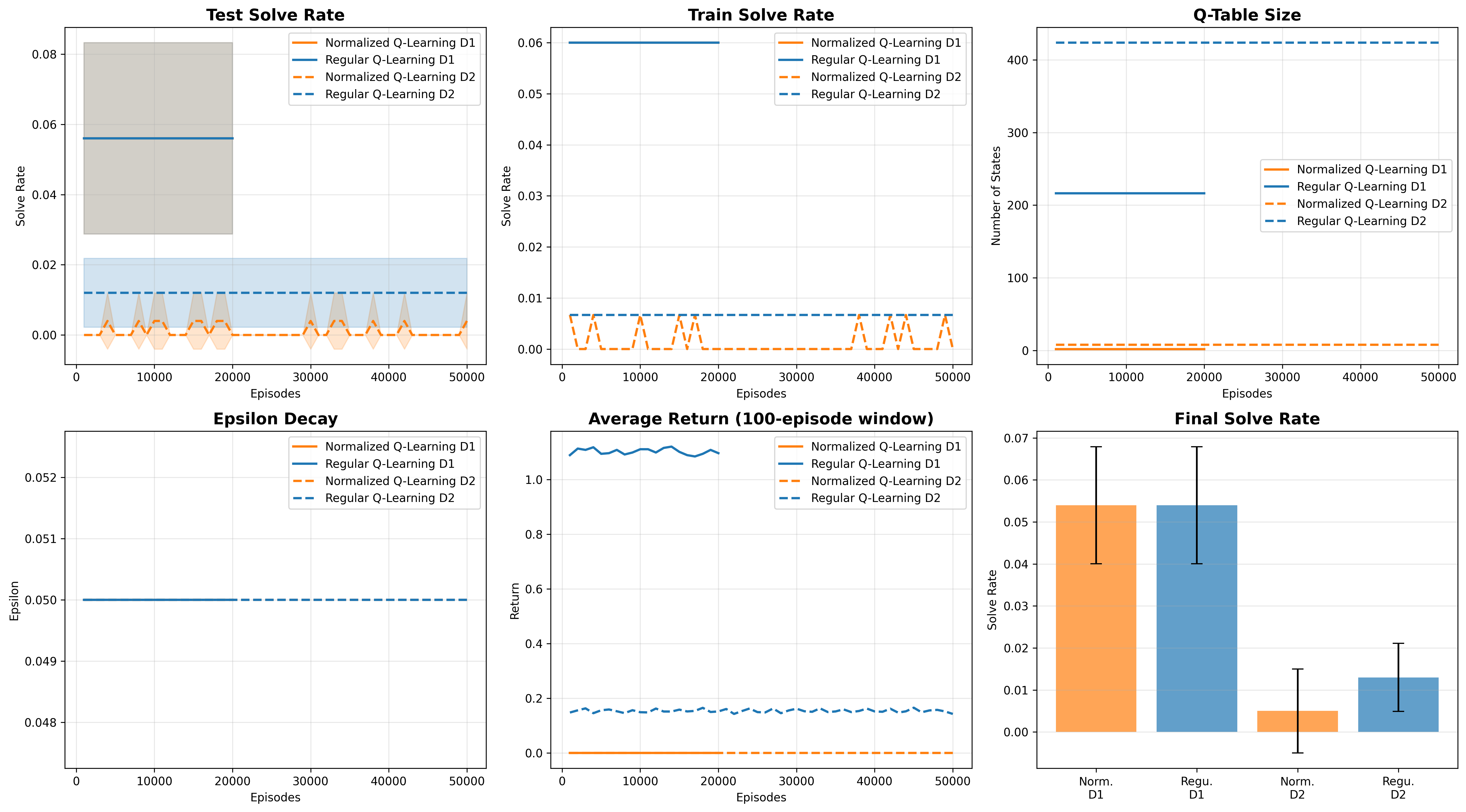
When Does Tabular RL Actually Break?
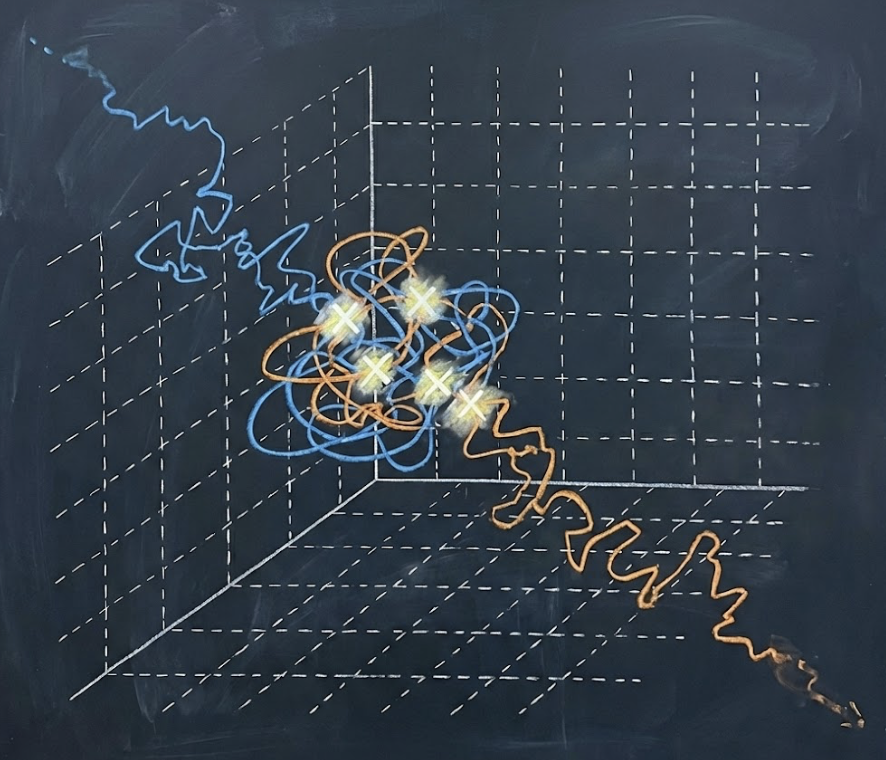
Blog Post, 2025 post A systematic study of representation bottlenecks in symbolic algebra, testing where RL breaks on high school math. |
|
Collision Thresholds on Lattices
Preprint arXiv An expository derivation using Poissonization and Laplace asymptotics to analyze random walks on lattices. |
Service
Reviewer, ICML AI4Math Workshop (2025, 2026)
|
Bellman
Ingests a Python codebase, proposes what must be true for it to be correct, translates functions into Lean 4 models, differentially tests each model against the real code, and proves or refutes the claims with the Lean kernel. Screens out |
|
|
PIEFACE
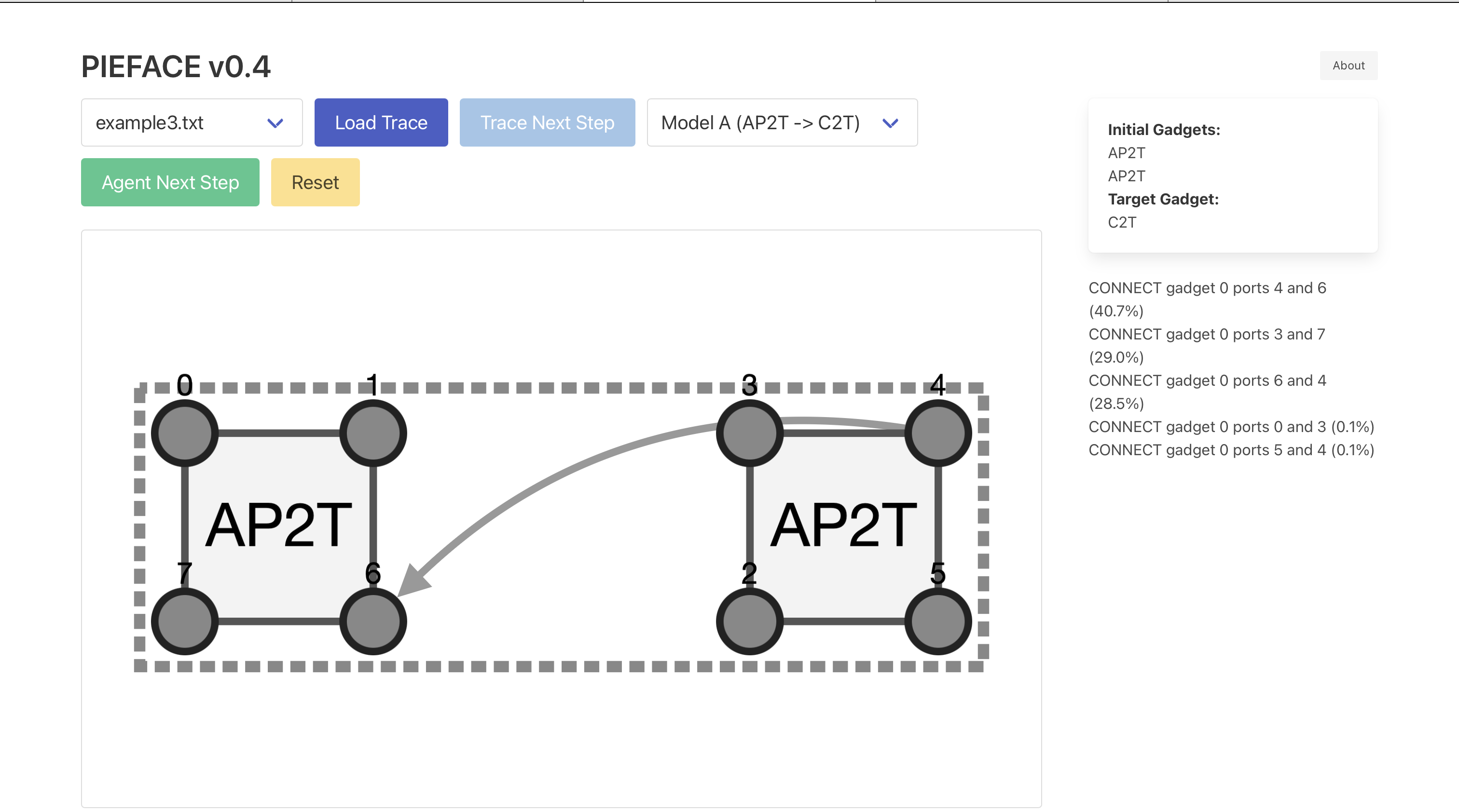
website Live RLHF platform for interactive policy personalization on an RL agent over motion-planning gadget structures. Flask + SQLAlchemy backend serving Maskable PPO models with top-K action inference over a 217-dim action space, custom PyTorch reward model trained on per-action accept/reject feedback, Cytoscape.js trace visualization frontend. |
|
zOS
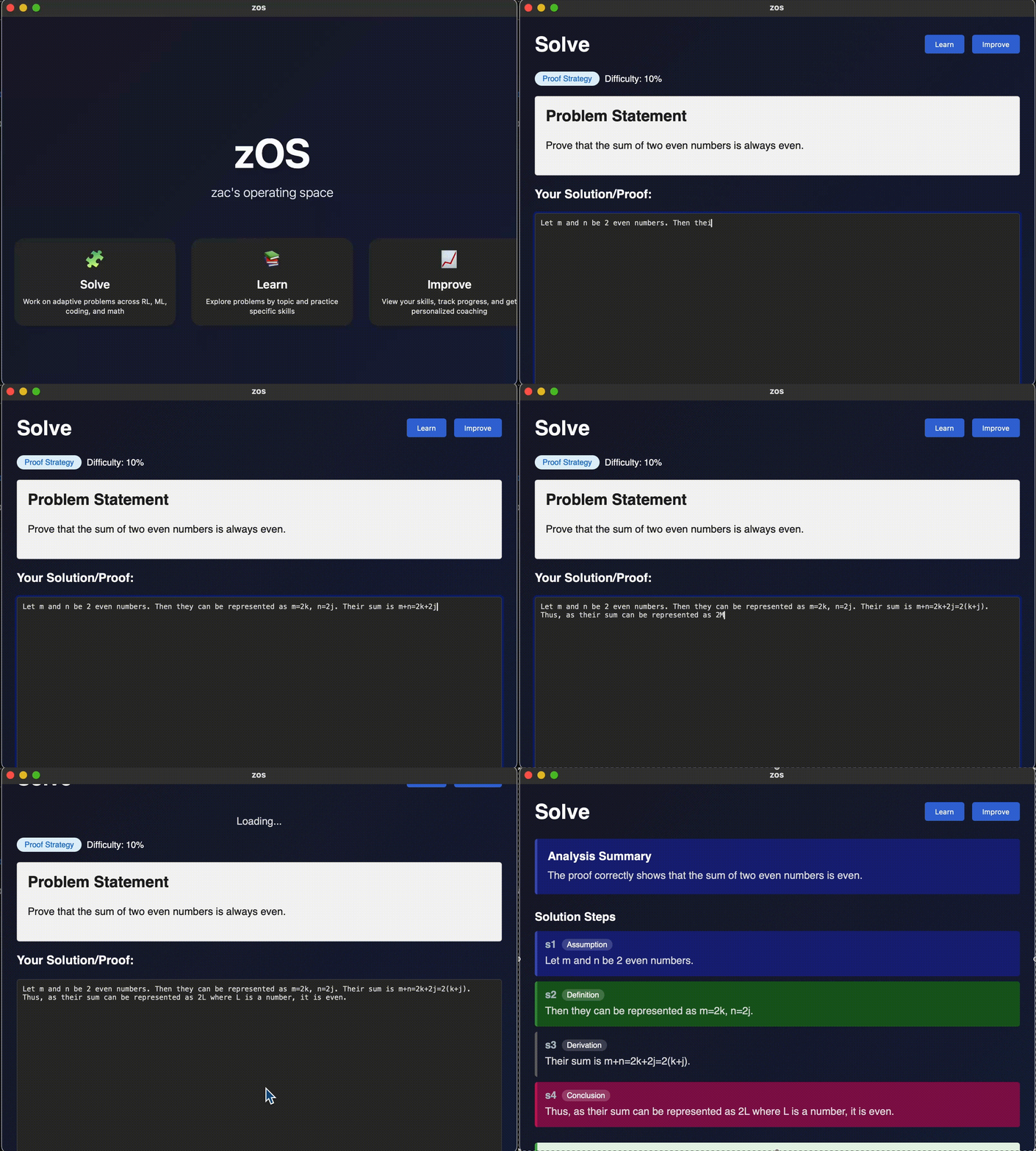
github Local LLM self-training loop with step-by-step feedback, written with Rust & Tauri. |
|
Baller
play A browser-based football career sim: start as a 10-year-old academy trialist and play through scholarships, contracts, transfers, and internationals. In-match decisions feed a deterministic, seeded match engine. |
|
|
Formal Complexity Science
Autoformalization of classical NP-completeness reductions in Lean 4, built on Mathlib and CSLib. Formalizes Karp reductions (SAT ≤ 3SAT ≤ 3-COLORING, with more planned) as machine-checked proofs. |
|
|
LLM Political Persuasion?
paper 17.279 (Political Misinformation in the Age of Social Media) Final Paper - independent empirical study (n=174, randomized) on AI disclosure effects on belief formation in political conspiracy-framing content. |
|
|
Scribe AI
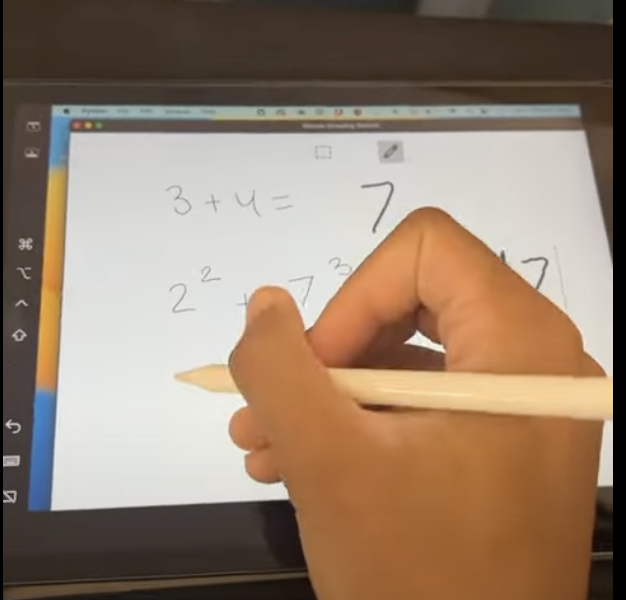
devpost Autocomplete for math handwriting. |